You're onboarding a new client, and everything looks good on paper. The contact person checks out. The business seems legitimate.
Three months later, your team get to know the company doesn't legally exist.
And it's precisely why know your business KYB and KYC verification not merely focus on compliance obligations - they're your first line of protection against fraud, regulatory penalties, and reputational damage.
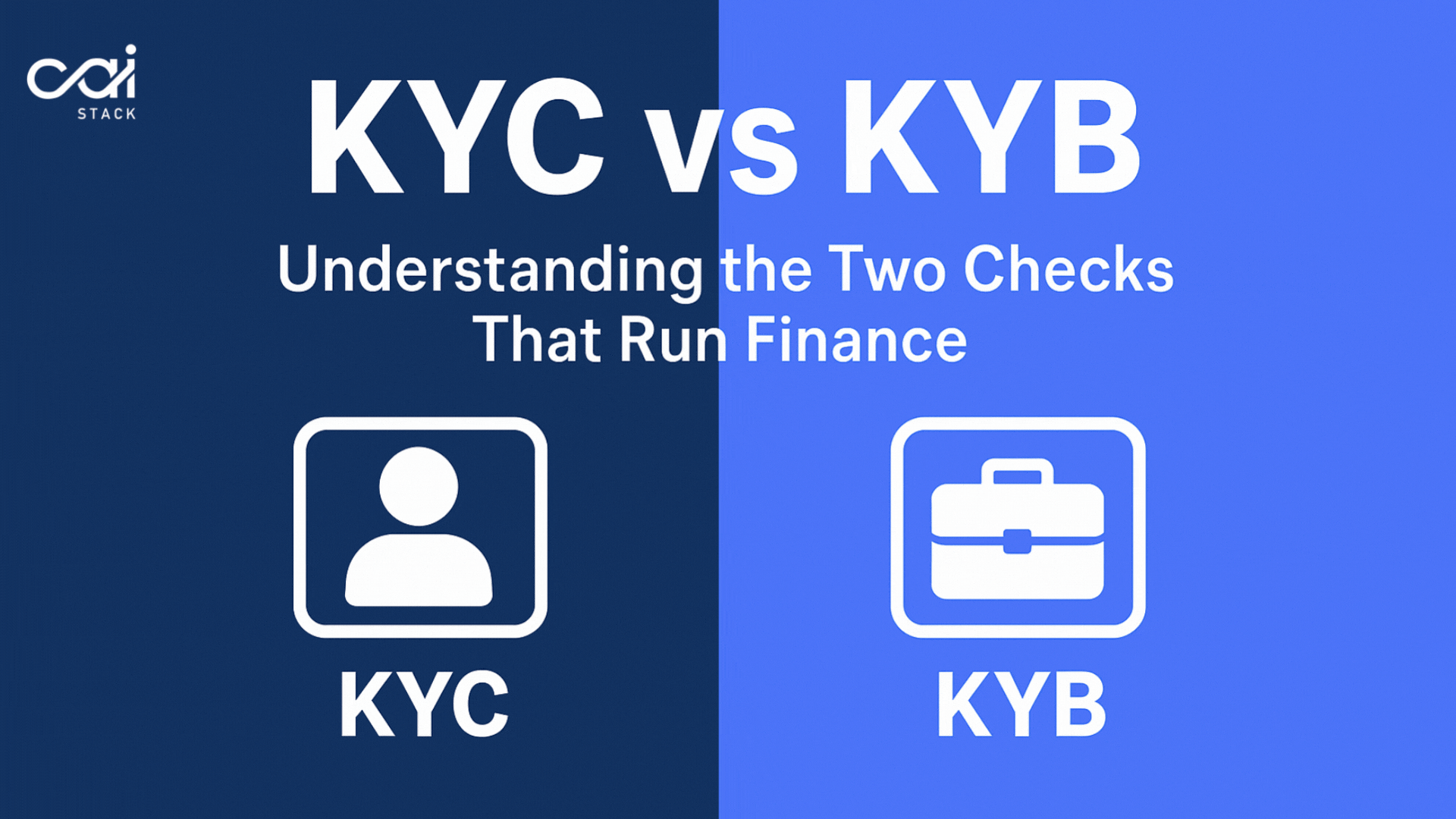
But most companies get confused: they consider KYC and KYB to be the same thing. They're not. And combining them can cost you damages and failed business opportunities.
Let's break down what each one actually does, why you need both, and how to implement them without turning your onboarding process into a bureaucratic nightmare.
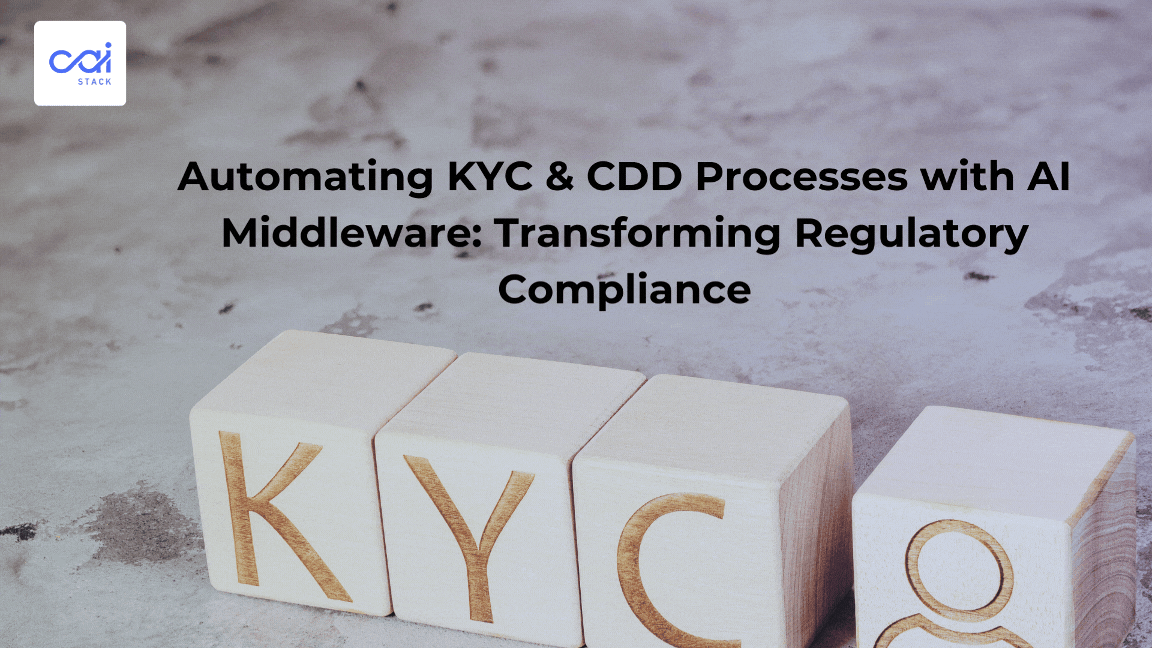
KYC stands for Know Your Customer.
It’s verifying that someone is who they say they are before giving them access to your financial services.
Like checking someone's ID before handing them your car keys.
Institutions generally filter customers against official government-issued lists such as the U.S. OFAC Sanctions List, the EU Consolidated Sanctions List, and the UN Security Council Sanctions List to identify high-risk or prohibited individuals
You're making sure the person on the other end is real and legal.
Banks and fintech companies do this. Anyone handling money runs KYC checks to stay out of trouble with the help of anti-money laundering laws.
According to the global standards laid out in the FATF Recommendations, financial institutions must conduct reliable customer identity verification as part of broader measures to combat money laundering and terrorist financing.
Know Your Business runs more in-depth.
It shows that you're not simply checking individuals but verifying whole companies.
As highlighted in the latest FATF Annual Report 2023-2024, transparency around beneficial owners of legal entities is now a core part of AML/CFT compliance - meaning KYB (not just KYC) is mandatory for institutions onboarding corporate clients.
And it gets chaotic very fast.
Why go through all this?
Scammers use fake names and hide behind real-looking companies. Shell corporations. Front businesses. Ownership structures built specifically to hide who's really in charge.
2023 data from the Basel AML Index shows global money-laundering and terrorist-financing risk has increased - the global ML/TF risk score rose from 5.25 in 2022 to 5.31 in 2023, with 10 being the maximum risk, highlighting why both KYC and KYB diligence remain critical.
KYB helps you cut through that and see who you're actually doing business with.
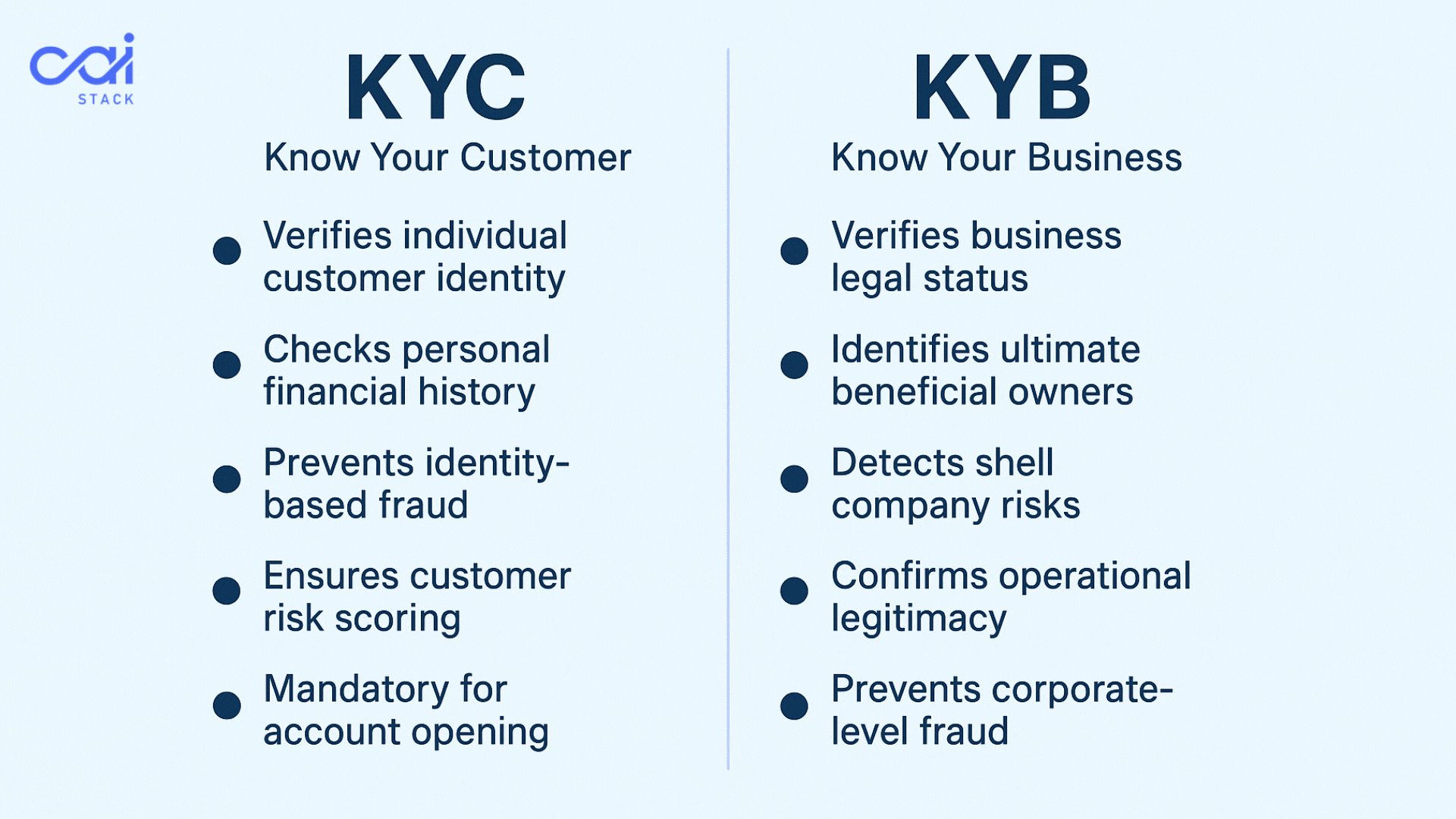
KYC verifies individual people. KYB verifies entire businesses and their ownership structures. That's the core difference, but it gets way more complicated from there.
KYC looks at individuals. One person at a time.
KYB looks at entire organizations and everyone involved in them. You're tracking ownership chains across countries.
KYC is straightforward. Check an ID. Run it through some databases. And the process is done.
KYB means digging through business registries in different countries, finding owners hiding behind holding companies, and piecing together corporate structures that were designed to be confusing.
KYC has been around forever. The rules are clear.
KYB is newer. Regulations keep changing. The EU's 5th Anti-Money Laundering Directive made things way stricter, and other countries are following the same.
KYC uses government databases, credit bureaus, and sanction lists.
KYB needs business registries, corporate filings, financial databases, and sometimes actual investigators.
People don't change much. You verify them once, maybe check again next year.
Businesses change constantly. Owners sell. Companies merge. Structures shift. You need to monitor KYB all the time.
Doing only KYC or only KYB leaves you uncovered.
Say your team runs KYC on all the directors of a company. Everyone passes. Clean records. No problems.
But the team skips KYB.
Turns out the company is registered in some offshore location with zero oversight. The real owner is on a sanctions list but hiding behind nominee directors. Their business license expired months ago.
You missed all of it.
Now try the opposite.
You do great KYB work. Company checks out. Registration is valid. Ownership looks clean.
But you don't run KYC on the people actually making transactions.
One person is using a stolen identity. Another is on a fraudster watch list. You find out after they've already moved millions.
Both situations end badly. Regulatory investigations. Huge fines. Reputation damage that takes years to fix.
KYB rules are different everywhere, but one thing's clear: they're getting tougher.
In the US, the Corporate Transparency Act started in 2021, and most companies now have to report who really owns them to FinCEN. Makes verification easier, but raises the stakes if you mess up.
In Europe, the 5th and 6th Anti-Money Laundering Directives made UBO reporting way more detailed. Fines can hit millions of euros.
In the UK, Companies House maintains a public register of company information - including Persons with Significant Control (PSC). Businesses are legally required to keep this ownership information accurate and up to date.
In Asia, Singapore, Hong Kong, and Australia all tightened up ownership reporting recently.
The penalties aren't just about money but include criminal charges, lost licenses, and reputation damage that destroys businesses.
You get it now. KYC and KYB are different. You need both.
These requirements aren't going anywhere. Regulations will get stricter. Penalties will get bigger. Scammers will get smarter.
We can show you how this works in real life. See how other companies handle thousands of checks daily while staying compliant.
Get verification right once. Everything else gets easier after that.
Subscribe to get the latest updates and trends in AI, automation, and intelligent solutions — directly in your inbox.
Explore our latest blogs for insightful and latest AI trends, industry insights and expert opinions.
Empower your AI journey with our expert consultants, tailored strategies, and innovative solutions.