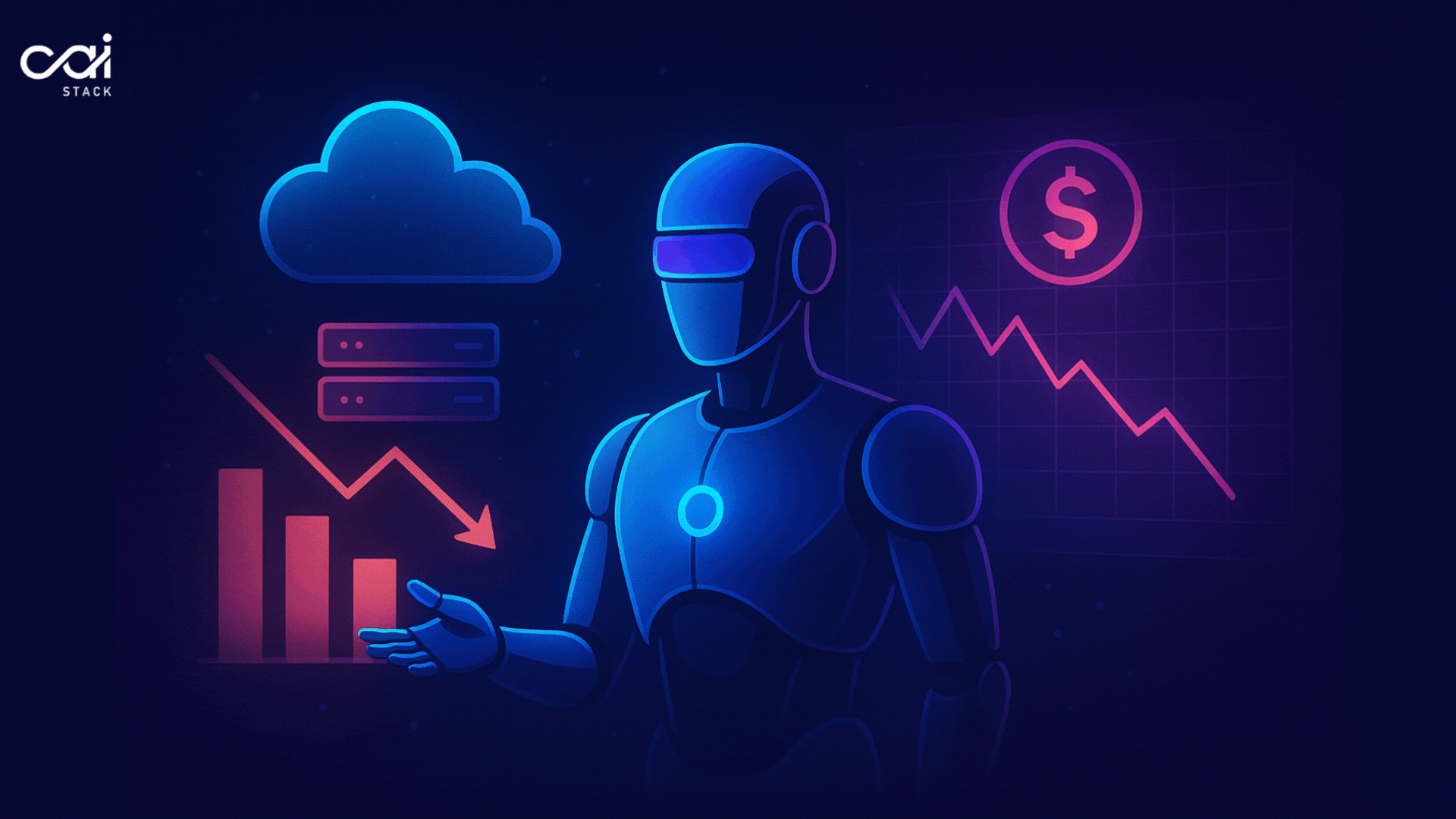
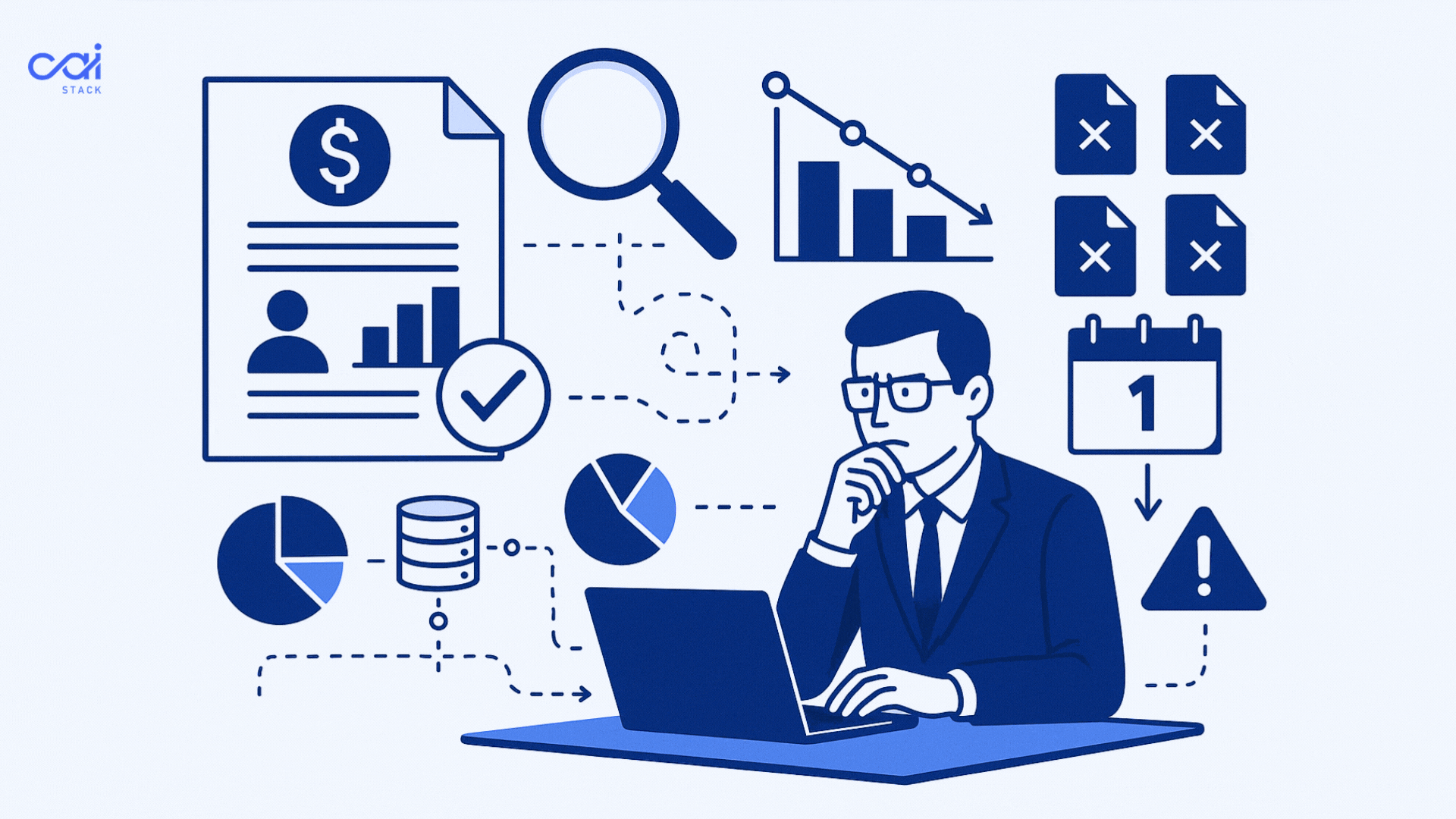
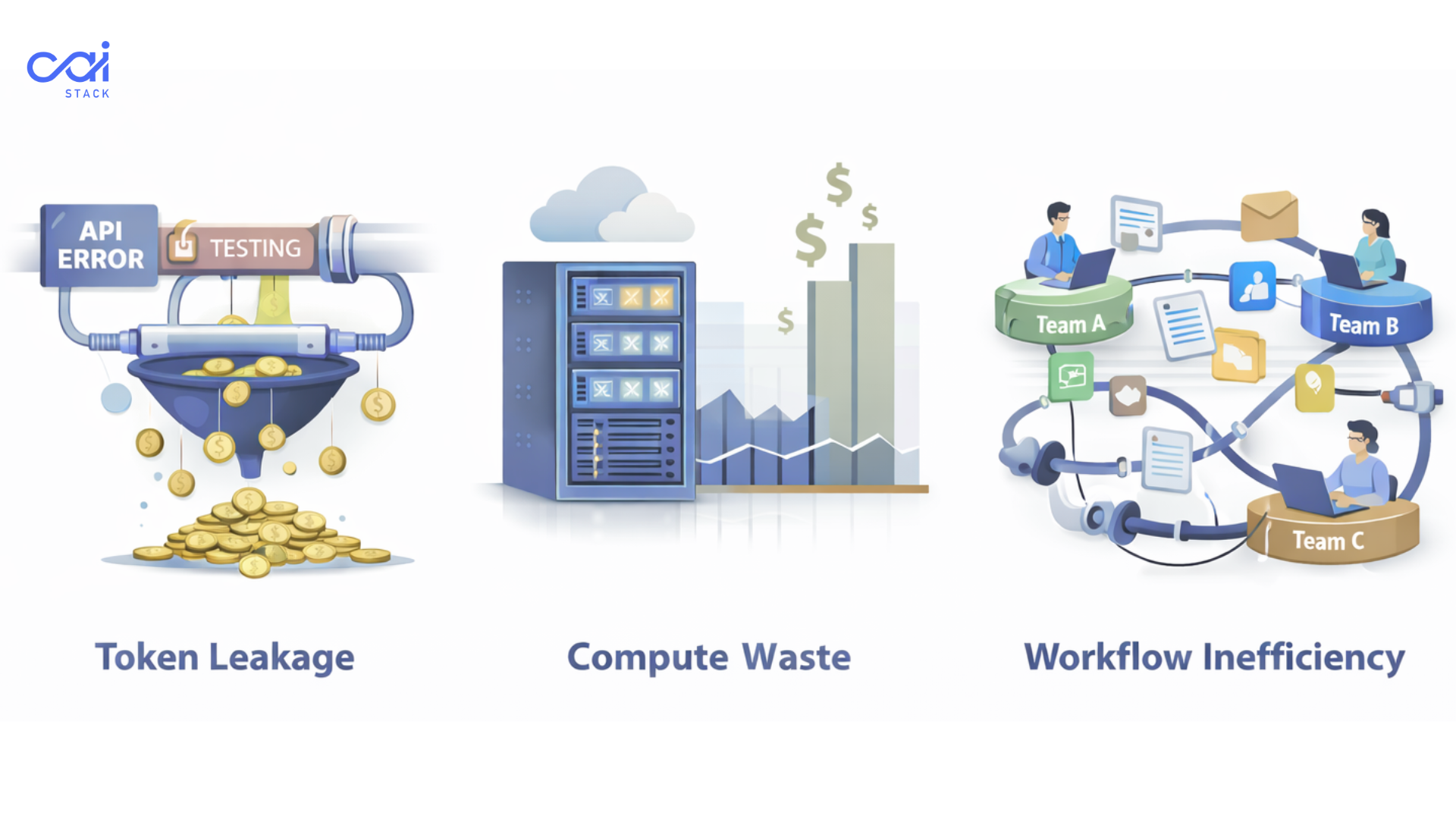
Somewhere between "let's test this new feature" and "let's roll it out," the team had unknowingly created a perfect storm of AI cost overruns. Failed API calls that kept retrying. Developers are testing prompts in production. Three different departments are using three different tools for the same task.
Nobody saw it coming. Because nobody was looking at the right metrics.
Major companies track AI spending the way they track cloud costs - one line item, one monthly bill, and one collective shrug when it goes up. But AI cost doesn't work like that. It's not just what shows up on your invoice - it's hidden in every failed workflow, every redundant process, every token your team burns through while "just testing something real quick."
And if you can't see where the money goes, you can't control it.
Token cost might show up on your invoice. But what about the tokens your developers waste on testing prompts? Or the ones lost when a workflow fails halfway through
Global corporate AI investment hit $252.3 billion in 2024. As adoption surges, so does the need to manage these hidden costs.
AI spending adds up faster than most teams expect - not because models are expensive in theory, but because they’re used continuously in production.
This is why AI cost doesn’t spike suddenly - it quietly compounds. Most overruns aren’t caused by one big decision, but by thousands of small, untracked ones.
Most finance teams see one line item: "AI Services - $X." But that number hides everything. Here's what actually drives AI infrastructure cost:
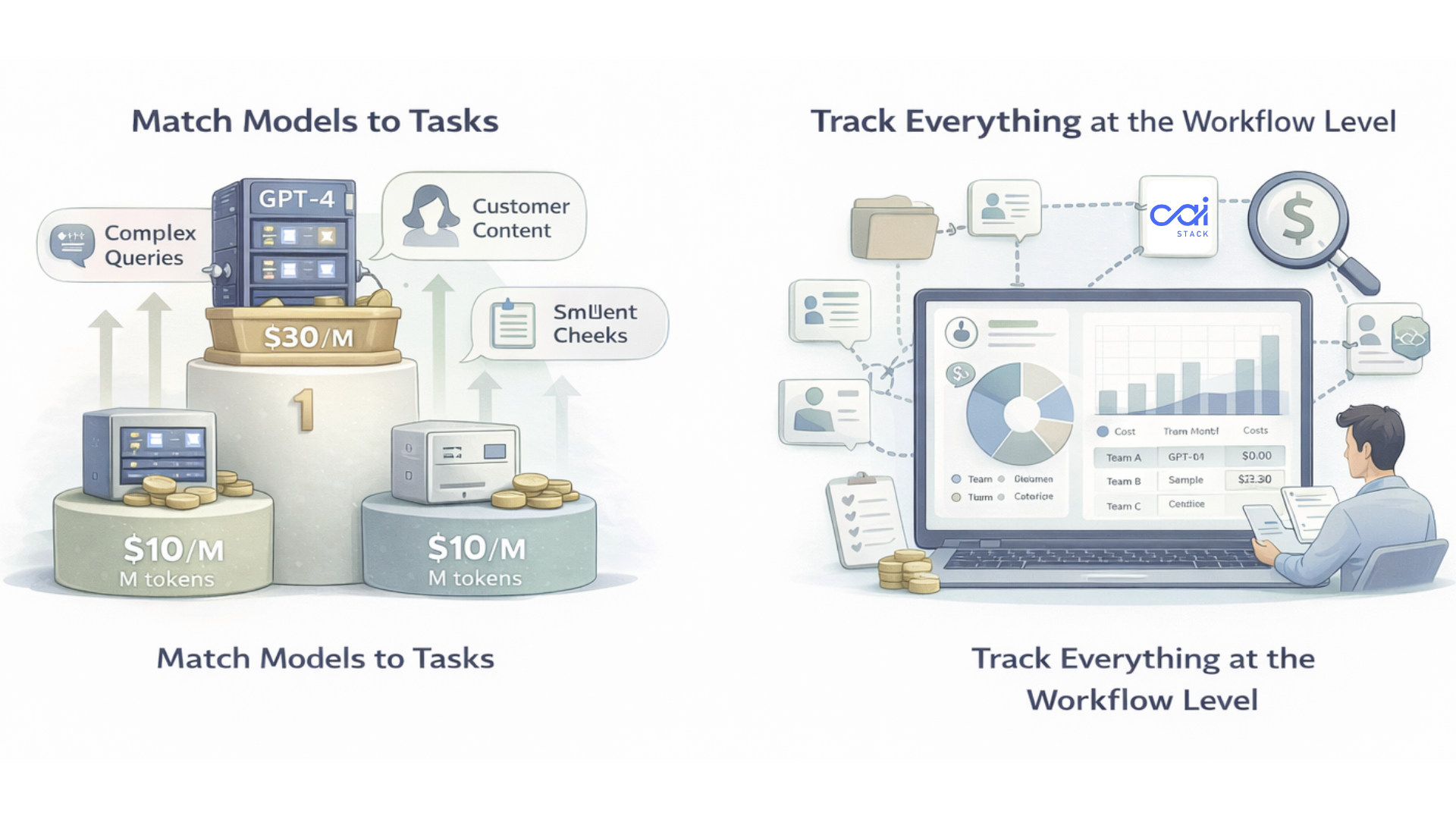
Not everything needs GPT-4. Use cheaper models for simple classification, basic summarization, and repetitive internal workflows.
The Stanford AI Index shows that smaller, more efficient models are rapidly closing the performance gap with large models across many common tasks, enabling significant cost reductions when models are correctly matched to workloads.
Save expensive models for customer-facing content, complex reasoning, and novel problems.
This alone can cut AI compute cost by 30-40%.
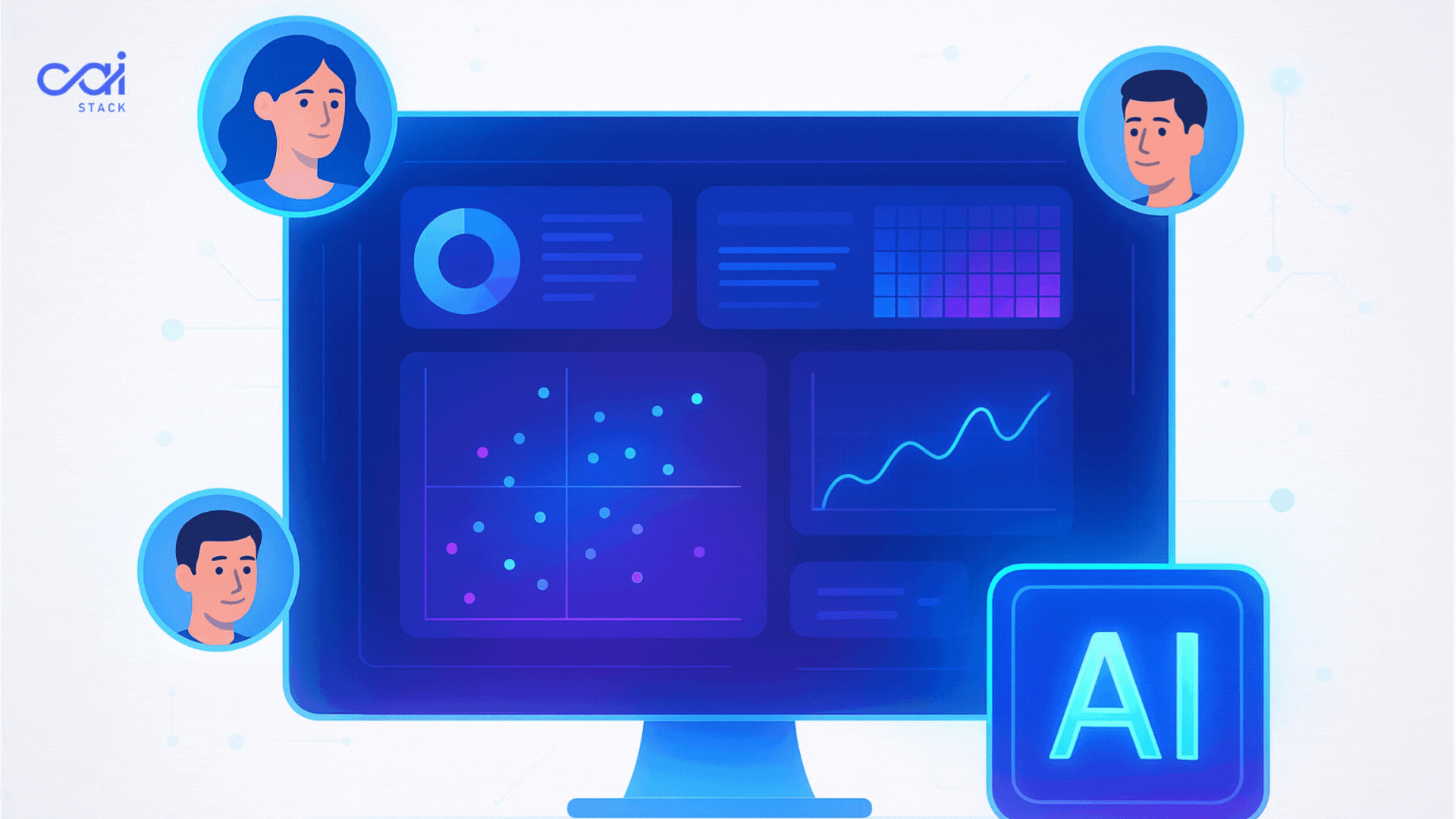
Here's where most companies fail: they track costs at the API level - "we spent $5,000 on OpenAI this month."
Great - but which workflows drove that cost? Which teams? Which projects?
FinOps best practices recommend tracking at the workflow level to understand true cost drivers and improve LLM cost control.
Struggling to get visibility into your AI spending? CAI Stack provides workflow-level cost tracking and intelligent model routing to help you see exactly where your budget goes. Learn more about optimizing AI costs.
Each seems small - but multiplied across an organisation, this is where real dollars leak.
AI cost has three layers: obvious charges, hidden waste, and workflow inefficiencies. Most companies only see the first one.
The companies winning with AI aren't the ones spending the most. They're the ones spending smartest - seeing where each dollar goes and optimising accordingly.
That's the difference between AI infrastructure costs that scale with value and costs that just scale.
Ready to take control of your AI spending? CAI Stack helps teams track, optimise, and control costs at the workflow level with intelligent model routing and automated cost guardrails.
Schedule your free personalized consultation to see exactly where your AI budget is going and discover opportunities to optimise for your specific setup.
Subscribe to get the latest updates and trends in AI, automation, and intelligent solutions — directly in your inbox.
Explore our latest blogs for insightful and latest AI trends, industry insights and expert opinions.
Empower your AI journey with our expert consultants, tailored strategies, and innovative solutions.